
Contents
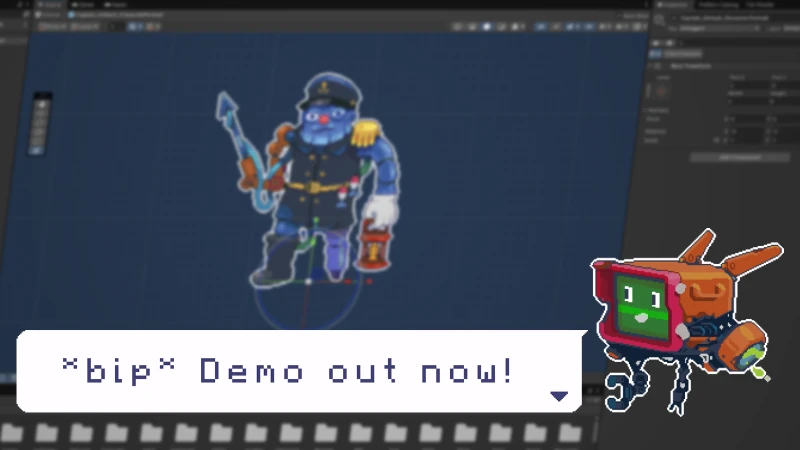
The demo is here!
Hi everyone! It’s been a few months since our last major update. All this time, our team has been working on the first demo so you can immerse yourselves in the world of Silicone Heart. And you can play it right now! PLAY NOW
What's new:
Fishing has become a full-fledged gameplay system
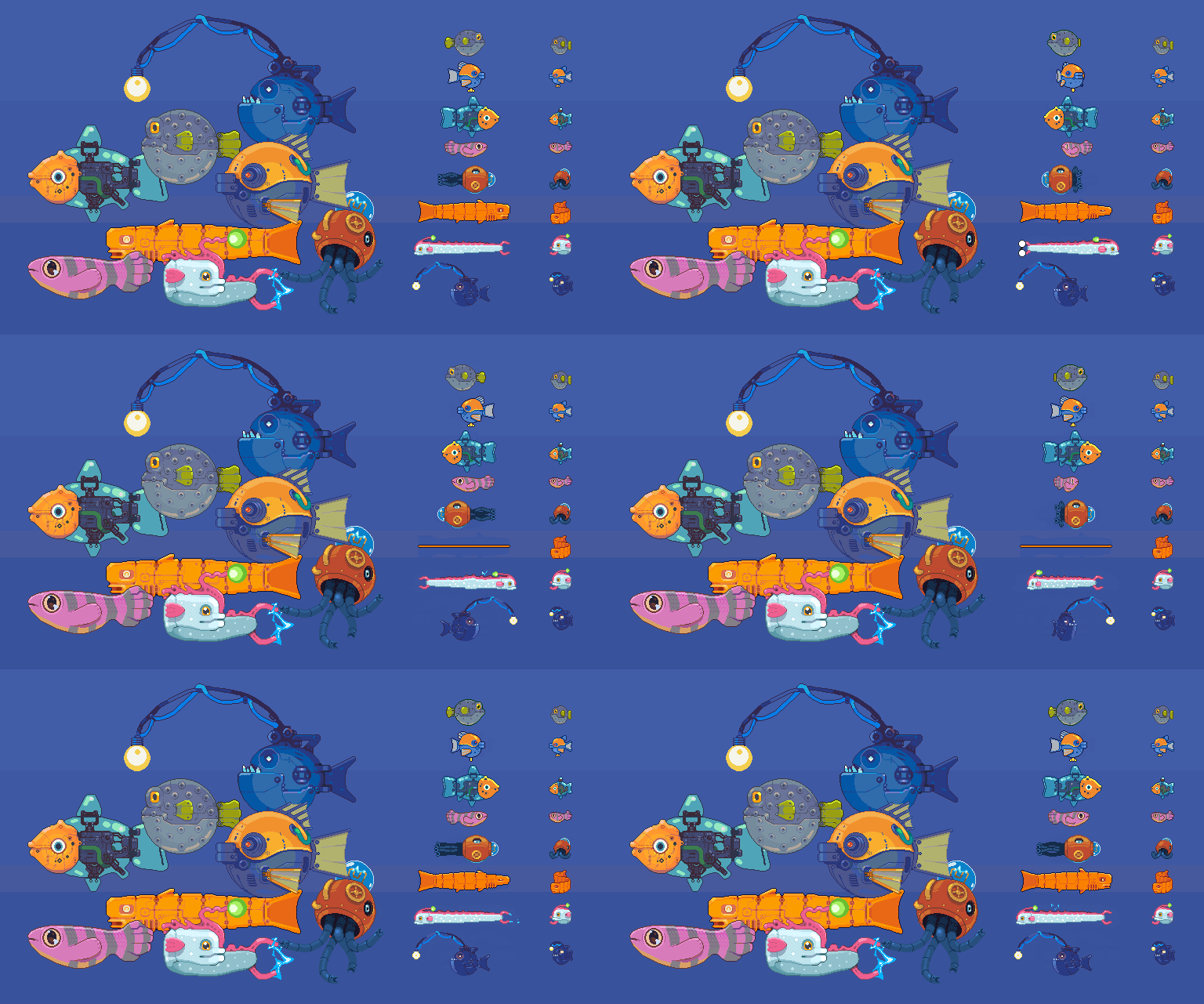
Fishing has been one of our main focuses over the past few months. What started as a small experiment gradually grew into a complete system with its own levels, controls, creatures, upgrades, and progression.
While fishing, you now control the hook, explore beautiful underwater environments, and hunt for different robotic fish. Each fish has its own stats, behavior, habitat, rarity, and animations. Fish patrol their territory, sense danger, flee from the hook, and react differently to damage.
We’ve also added:
- 8 fish species;
- keyboard and mouse controls for the hook;
- fishing line physics and reel animations;
- a flashlight and radial lighting;
- environmental lighting;
- a timer for each fishing session;
- persistent fish states and population recovery;
- a preparation screen and a results menu;
- a dedicated inventory for fishing upgrades;
- active and passive items;
- catch rarity and visual presentation;
- animations for large fish you catch.
New upgrades include hooks, lines, reels, bags, and flashlights. While fishing, you can use a magnet, a compass, lures, and other devices that affect the behavior of the hook or the fish.
Fishing levels now feature distinct lighting, parallax, visual effects, aquatic plants, and underwater scenery.
A major canyon questline
Another major focus has been the canyon’s new storyline.
You’ll explore a new area and get caught up in a story involving robotic vultures, damaged hostile machinery, and the creation of a new robot companion—or perhaps just another grump. The questline includes several interconnected branches that can be pursued in parallel.
For this storyline, we created dozens of new objectives, dialogues, animations, items, quest objects, and scripted scenes. Characters move through the world, machinery comes to life after repairs, and the area gradually changes in response to your actions.
There are other new stories to discover, too.
On the farm, you’ll be able to find a strange device with a robot stuck inside. Meanwhile, meeting the Captain at the scrapyard will help introduce you to fishing. The Captain will give you your first upgrades and guide you through the basics.
A livelier, more varied world
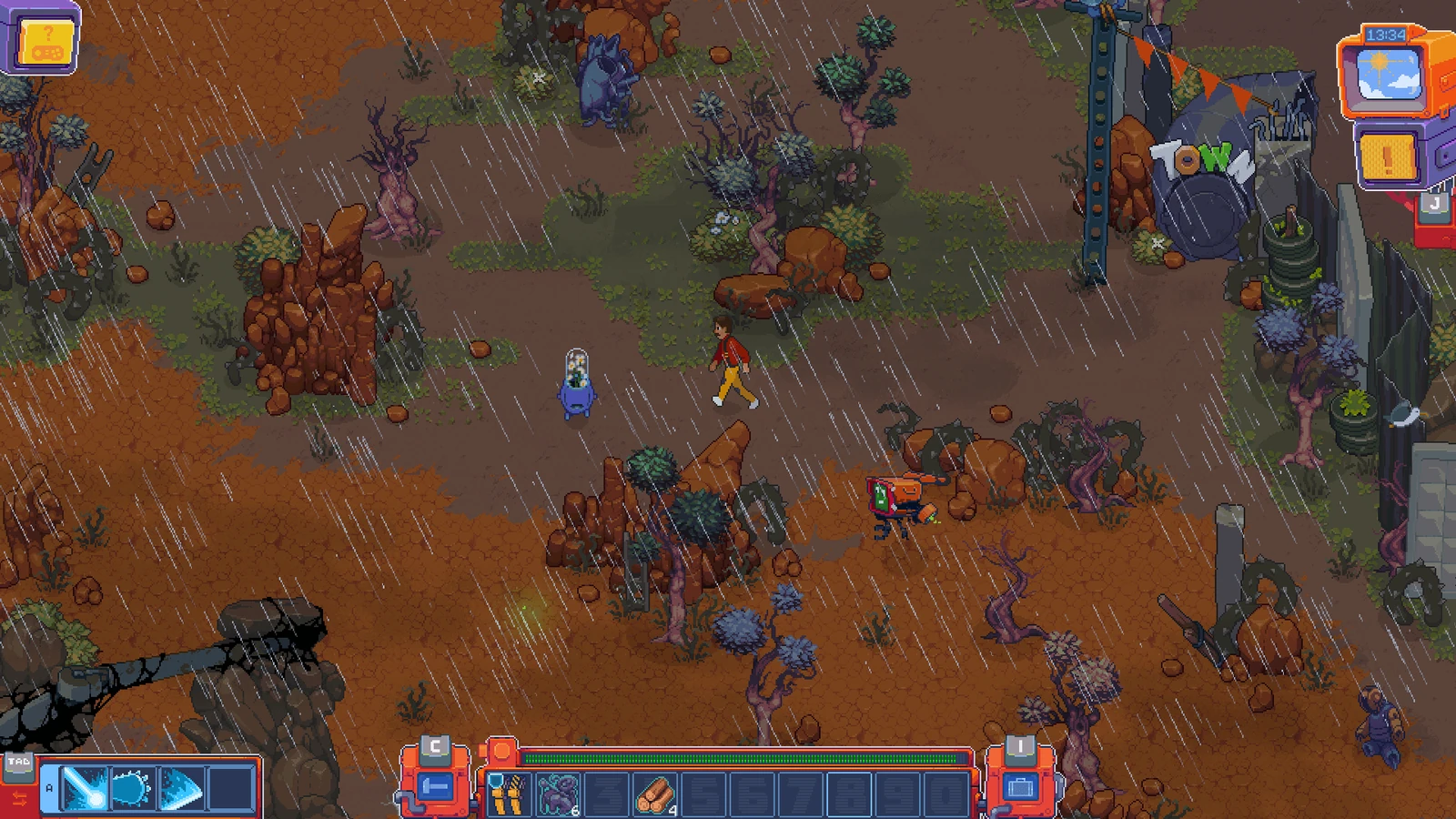
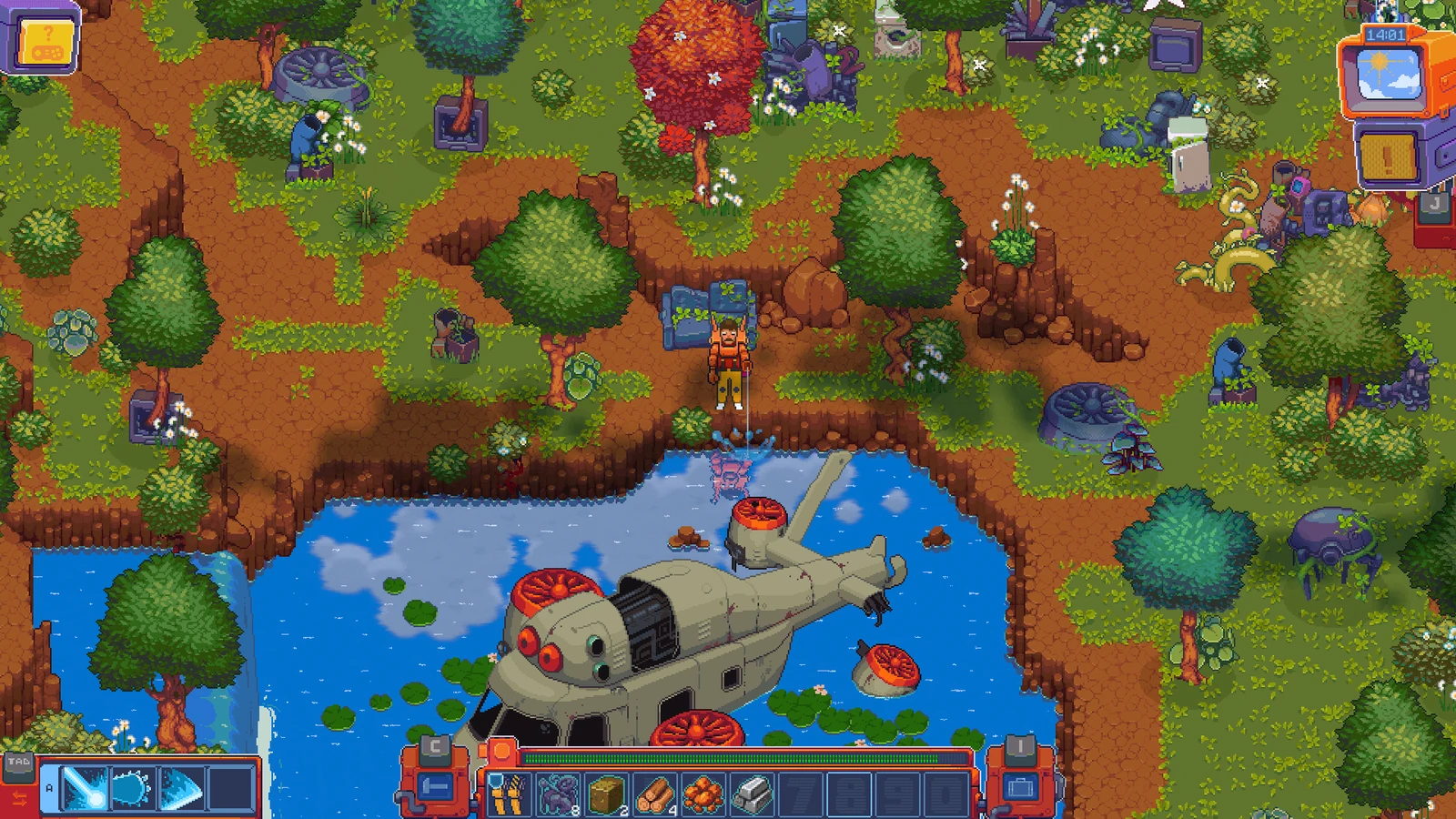
Over the summer, the farm, canyon, and other areas received numerous major visual updates.
We updated hundreds of elements in the main tileset, reworked object placement, and added new environmental details:
- an animated waterfall;
- flags and vegetation;
- bushes that react when you approach;
- new dark trees and stumps;
- a cave and additional canyon areas;
- wrecked machinery and roadside objects;
- rabbit burrows;
- birds;
- signal lights;
- new scrapyard elements;
- updated walls, rocks, and decorative objects.
We’ve introduced a new world lighting system. Different locations and game modes can now use their own lighting profiles, controlling color, brightness, vignetting, and transitions between times of day.
We’ve also worked on cloud shadows, reflections, water, and lighting for the fishing levels.
A complete audio overhaul
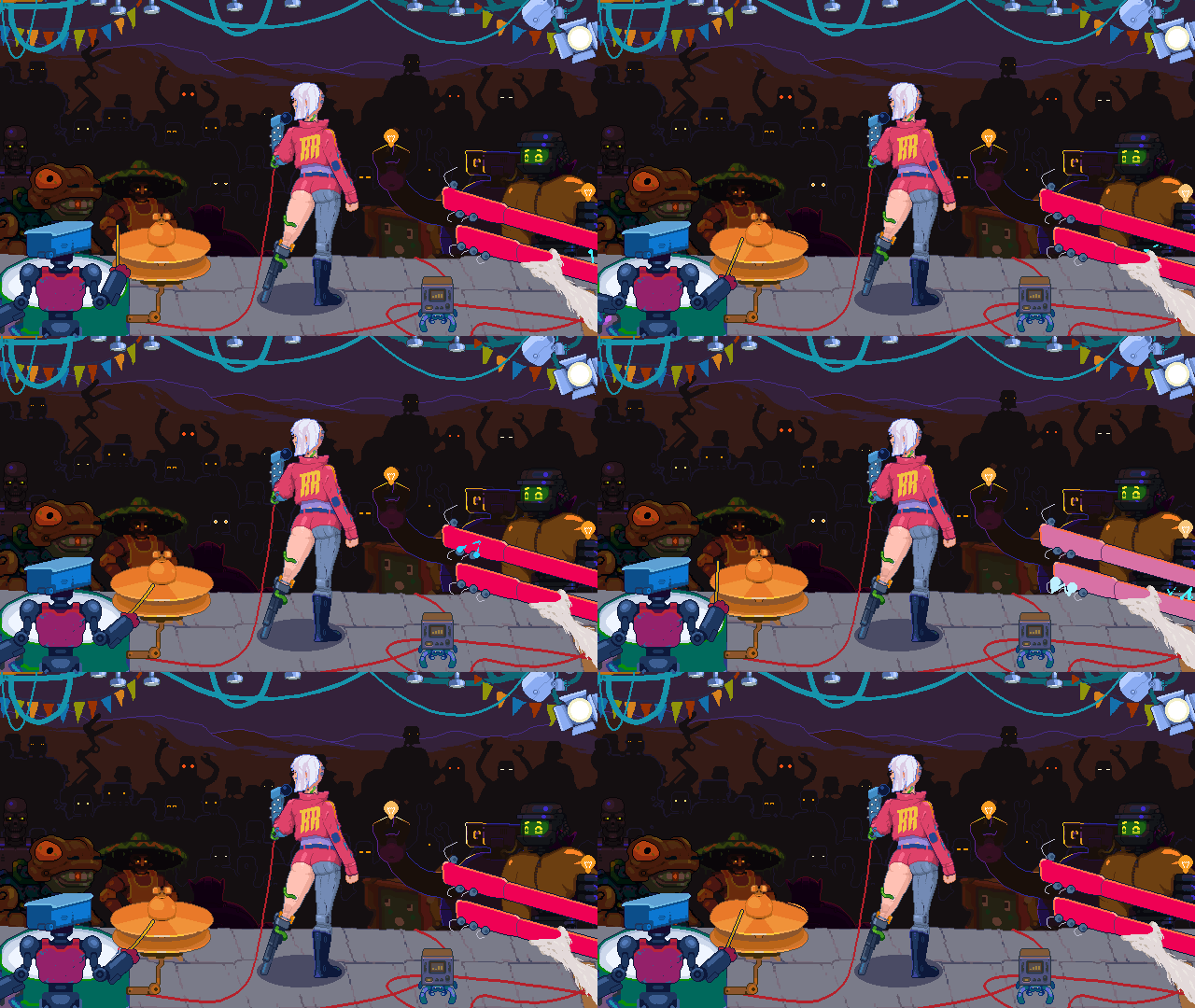
Over the past few months, Silicone Heart has moved almost entirely to a new audio system.
We integrated FMOD and built a unified audio framework for music, ambience, the interface, voices, cutscenes, and gameplay effects.
We’ve added or updated sounds for:
- player footsteps on different surfaces;
- Robopack and its tools;
- the laser, saw, sword, watering can, and hoe;
- planting;
- printers and production machines;
- the generator, battery, and other buildings;
- repairs and refueling;
- construction and object placement;
- items and their impacts when dropped;
- trees, stumps, doors, and environmental objects;
- minigames;
- the interface;
- story scenes and gameplay events.
We also reworked the dialogue system: voice playback now stays in sync with the current line, the previous recording stops correctly, and consecutive conversations no longer interfere with one another.
We’ve also connected Russian voice-over to dialogue events and added automatic voice switching when the language changes.
Power drives production
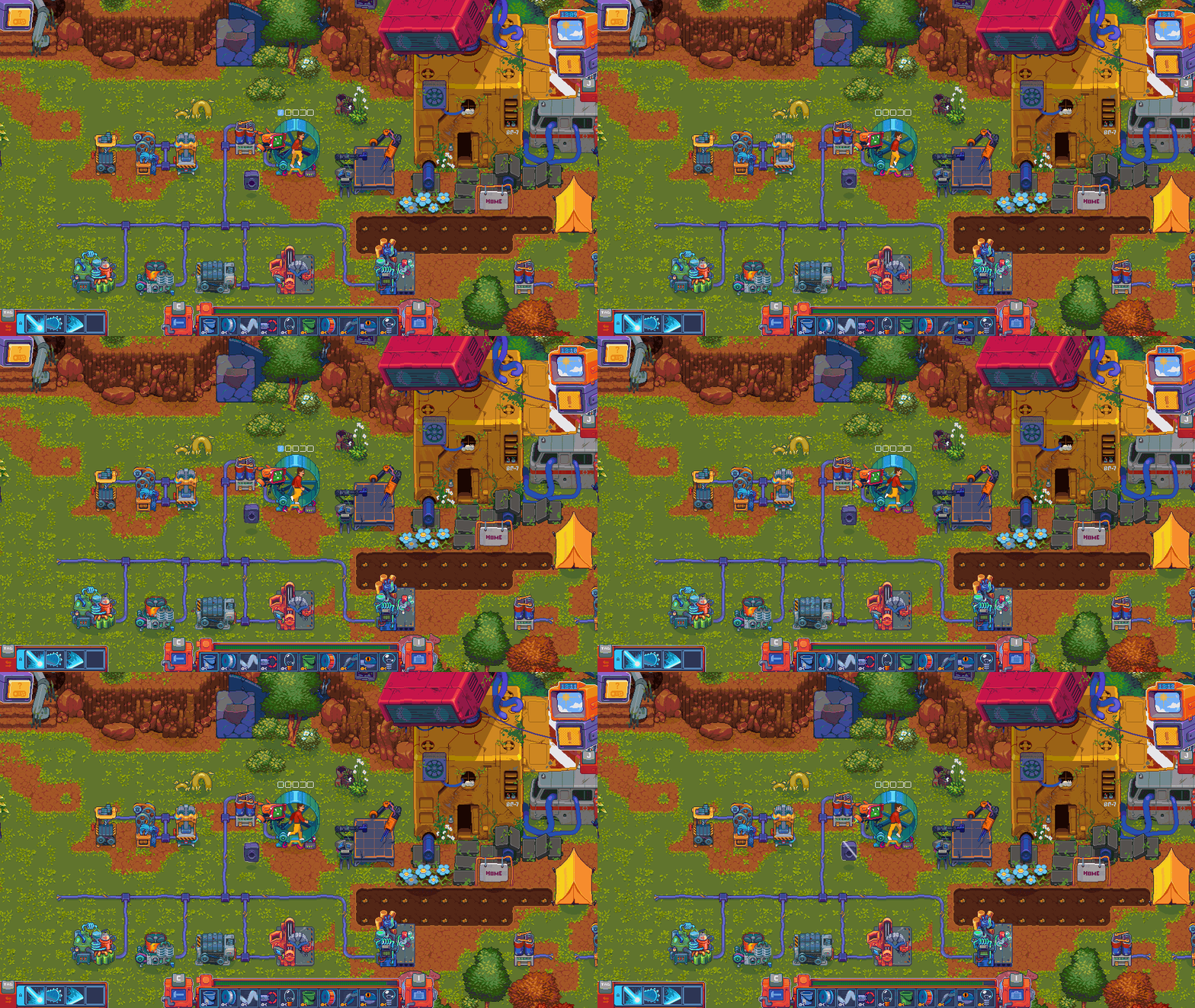
The building power system has become much more detailed.
Production buildings now draw energy from a shared grid and consume it while operating. Printers, recyclers, the biodistiller, and other devices cannot start without enough power.
When a building cannot operate, you’ll see a helpful prompt, along with a visual effect when its power status changes.
We’ve also:
- improved wire connections to buildings;
- added power inputs to printers;
- optimized power grid recalculations;
- fixed grids built in areas with negative coordinates;
- standardized interaction requirements for production buildings;
- reworked the states of buildings that are broken or need refueling.
These changes make the connection between resource gathering, power generation, and farm automation clearer.
Controls, interface, and settings
We replaced the old interaction prompts with a new system that automatically detects your current input device.
The updated prompts are already in use across more than forty gameplay objects and interfaces, including buildings, plants, items, the inventory, quest objects, Tutorial Ship, BOE, and Arnold Cart.
Display settings now include monitor selection, and your choice of fullscreen, windowed, or borderless mode is saved correctly.
More reliable saves and quests
Much of this work happens behind the scenes, but it makes future development faster and safer.
Quests now consist of reusable commands for dialogue, character movement, camera control, items, the interface, and world state.
Each important step has its own checkpoint. The game remembers both the current objective and changes to objects in the world—their position, appearance, animation, and active state. After loading a save, a repaired machine or a relocated character should no longer revert to its original state.
We’ve also added save format versioning, improved inventory handling, introduced item rarity, and reworked how global settings are saved.
And plenty of fixes
Alongside these larger systems, we fixed many issues reported by players, including:
- quest problems after loading a save;
- Running Wheel functionality;
- elevator behavior;
- gamepad interaction with Repair Table and Box;
- placement area displays;
- the positions of dropped quest objects;
- item behavior in water;
- building and interface sounds;
- camera behavior during cutscenes;
- prompt display;
- Arnold Cart functionality;
- various issues across the farm, canyon, and Tutorial Ship.
At the same time, we’re continuing to clean up and optimize the project, remove outdated components, and lay the groundwork for future mechanics.
Thank you for being here
Silicone Heart has grown considerably in size, depth, and atmosphere. Fishing has become a complete gameplay system, the canyon has gained a full storyline, the world is filled with new details, and the game’s audio and underlying architecture have been almost entirely rebuilt.
There’s still plenty of work ahead, but we’re very happy with how the project is taking shape.
Thank you for following development, wishlisting Silicone Heart, and helping us build this strange, cozy world among the rusty machines.
See you in the next update!
Comments · 0